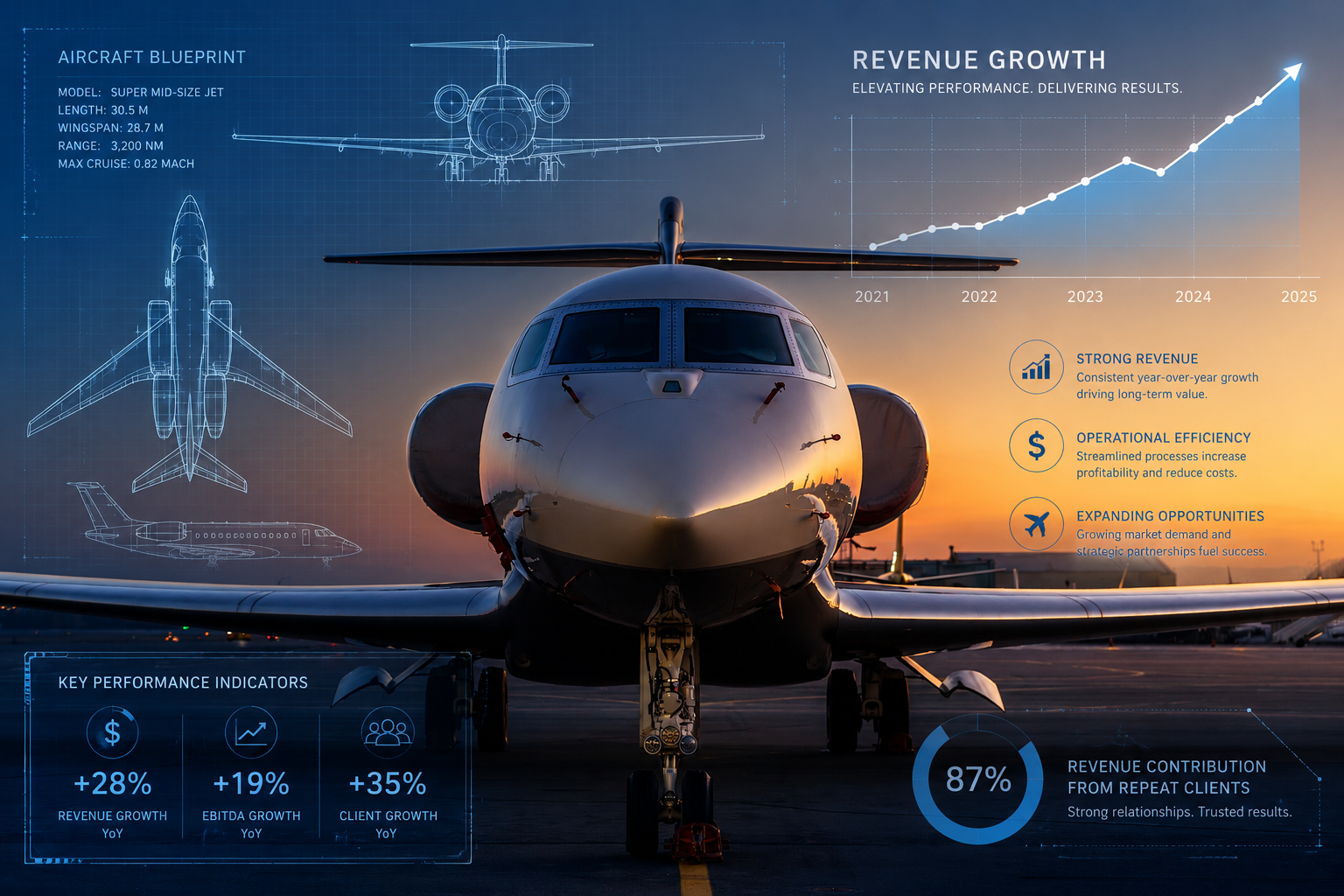
Modern Air Charter Success Is About Maximizing Revenue, Not Just Managing Flights
For years, air charter software has focused on one primary objective: managing flights. Scheduling aircraft, assigning crews, tracking maintenance, and organizing customer information- these are essential functions that keep an operation running smoothly.
But today’s operators are facing a different challenge.
The question is no longer, “Can we manage this trip?” It’s “Should we fly this trip, and will it maximize our profitability?”
As operating costs continue to rise and competition intensifies, successful charter operators are shifting from simply managing operations to actively optimizing revenue. Every flight, customer, and aircraft movement represents a financial decision that can either improve or reduce profitability.
This is where Revenue Management has become one of the most valuable technologies in modern air charter operations.
Every Flight Is a Business Decision
Today’s operators are asking smarter questions before accepting a trip:
- Which trips are actually profitable after accounting for operating costs?
- Which customers generate the highest lifetime value?
- Should we reposition an aircraft for this opportunity?
- Which empty legs have the greatest chance of being sold?
- How can we increase aircraft utilization without sacrificing margins?
Answering these questions requires far more than a scheduling system. It requires data-driven decision-making.
The Industry Is Becoming More Data-Driven
Across aviation, operators are embracing analytics to improve every aspect of their business. Revenue optimization has become just as important as flight operations.
Rather than relying on experience or intuition alone, operators now expect software to provide insight into:
- Profitability by aircraft
- Profitability by trip
- Customer buying behavior
- Events
- Revenue trends
- Fleet utilization
- Empty leg opportunities
- Operational efficiency
- Sales performance
Having this information available in real time allows operators to make faster, more confident business decisions.
Looking Beyond Flight Management
Traditional flight management software focuses on operational execution:
- Scheduling aircraft
- Assigning crew
- Managing maintenance
- Tracking trips
- Recording customer information
These capabilities remain essential.
However, they don’t necessarily answer whether the business is making the best financial decision.
Revenue optimization adds another layer by helping operators understand the financial impact behind every operational choice.
Instead of simply asking, “Can we schedule this flight?” operators can ask:
- Is this trip worth accepting?
- Does this customer justify premium availability?
- Should we move an aircraft now to capture future revenue?
- How much demand is in this area?
- Do I need to change the type of aircraft or the number of aircraft?
These are the questions that directly influence profitability.
Empty Legs Become Revenue Opportunities
Empty legs have traditionally been viewed as unavoidable costs of operating an aircraft.
Forward-thinking operators are changing that mindset.
With the right visibility into aircraft positioning, customer demand, and historical booking patterns, empty legs become valuable inventory that can be marketed strategically.
Rather than simply listing available repositioning flights, operators can identify which opportunities are most likely to generate revenue and target the right customers at the right time.
The result is improved aircraft utilization and increased revenue from flights that might otherwise generate no income.
Understanding Customer Lifetime Value
Not every customer contributes equally to long-term growth.
Some clients book a single trip.
Others become repeat customers who generate significant revenue year after year.
Understanding customer lifetime value allows operators to:
- Prioritize high-value relationships
- Deliver personalized service
- Focus sales efforts where they create the greatest return
- Develop long-term partnerships instead of one-time transactions
Revenue management isn’t just about individual flights—it’s about building a more profitable customer portfolio.
Smarter Aircraft Positioning
Aircraft repositioning is one of the most important—and expensive—operational decisions an operator makes.
Moving an aircraft can create new revenue opportunities, but it also carries costs.
Revenue-driven operators evaluate repositioning based on multiple factors:
- Future booking potential
- Market demand
- Aircraft availability
- Crew scheduling
- Estimated profitability
- Customer commitments
When these decisions are supported by accurate operational and financial data, operators can improve fleet utilization while reducing unnecessary repositioning expenses.
Charter and Go: Built Around Revenue Management
At Charter and Go, we believe successful charter operators need more than flight management software.
They need a platform that helps them make better business decisions.
Our Revenue Management platform is designed to provide operators with greater visibility into the financial performance of their operation, helping them understand where revenue is generated, where margins can be improved, and where future opportunities exist.
By combining operational workflows with revenue intelligence, Charter and Go enables operators to:
- Evaluate trip profitability before accepting bookings
- Better understand customer value
- Improve aircraft utilization
- Market empty legs more effectively
- Support smarter repositioning decisions
- Monitor business performance through meaningful operational data
Rather than simply managing flights, Charter and Go helps operators manage profitability.
The Future of Charter Operations
The air charter industry is evolving rapidly.
At Charter and Go, we’re helping operators make that transition—turning operational data into actionable insights that drive sustainable growth, stronger profitability, and smarter business decisions.